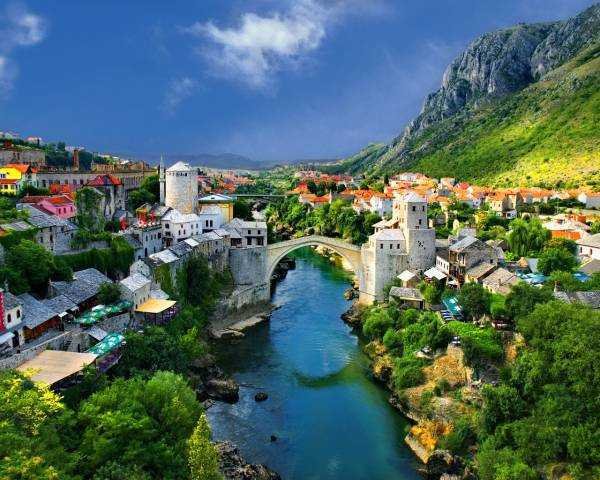
The cozy Balkan country near the Adriatic Sea, Albania, invites tourists to visit, but takes into account concerns about super flows, reports Skift.

In order to distribute tourist flows, the state initiated a special project, within the framework of which tourists will be received by remote Albanian villages.
For example, the village of Njivica, nestled in the mountains behind an old, ruined fortress, is little known even to many Albanians, but an ambitious project aims to open the place up to the outside world and tourists wanting to see the impressive natural beauty and rural lifestyle of isolated areas of the country.
“We have launched an experimental project based on the concept of close interaction with rural communities. For example, Njivice will be interesting for tourists because of its glorious history. Roman troops passed through here, the Normans and Ottomans traveled here. There are many stories and events associated with this area. Plus, there is a wonderful landscape, untouched nature and the authentic way of life of the locals. Here you will see how people milk their sheep and goats. This was the case 4,000 years ago and it is the same today. Sheep milk is still transported to the local cheese maker by donkey, and elderly villagers go hiking in the mountains to collect wild oregano and other herbs. Touching this way of life will be extremely interesting for people who have lost this heritage. Here they will feel a special atmosphere and receive spiritual enrichment,” the head of the Auron Tare project told the publication.

At the moment, the most frequent visitors to this region are young tourists from European countries, traveling along the ancient trails of Albania and staying near the village in tent camps. Thus, over the past month, the village was visited by about 150 tourists, mainly from the Czech Republic.
“This village is deep in the mountains and before the project started I had never even heard of it,” admits Lorena Sinatrakai, an archaeologist working on the project.
At the start of the project, the village, whose daily life is connected with agriculture and livestock farming, was very far from the topic of tourism and was in a rather dilapidated state. Mainly because there was no waste removal system, and all of it accumulated right on the streets. In addition, many local residents moved to cities and other countries.

The first task of the project was to clear the area of garbage, both inside the village and in the nearby ravines. The second stage is the construction of hotels. It is expected that the construction of a new boarding house will be completed here by next spring. The project also includes the restoration of old buildings, which will be used as guest houses, and the construction of roads.
By the way, some residents who once left the village are already thinking about returning.
Meanwhile, project managers understand the risk of turning the village into a tourist attraction where buses carrying hundreds of tourists will stop every day.

The danger of mass tourism taking hold too quickly in the area is real. The project is not intended to attract huge numbers of tourists. That could destroy the area's tranquility and threaten the local way of life, they say.
"We are trying to introduce tourists to traditional hospitality without violating the local culture. This is a difficult aspect, of course, and time will tell whether we have taken the right path," says Auron Tare.
Source: trn-news.ru