What clothes to take with you to India

India is a fairly conservative country, so it is best to dress modestly, especially if you are traveling to remote villages and visiting temples. Women should avoid wearing mini-shorts and skirts, excessively bare shoulders, and low-cut T-shirts.
Men should avoid wearing overly revealing T-shirts and shorts.
In short, the most suitable clothes for hot India are loose, concealing the figure, made of light fabrics (cotton, linen) - this is what the locals wear. So, sooner or later, you will probably go shopping. What traditional outfits can you buy?
What do men wear in India?
With men, everything is simple. Basically, most wear either “European” clothes: shirts, T-shirts or spacious elongated tunics (they are called kurta) – all this with jeans or trousers.
But sometimes you can find a more democratic version: instead of pants, the legs are wrapped in a dhoti blanket - an elongated relative of the loincloth. Strictly speaking, a dhoti is a long piece of fabric that is wrapped around the hips and one end is passed between the legs.

The length of the dhoti is a sign of caste, so somewhere on a construction site you can see short dhotis - almost loincloths.
Indian women attire
There are three main types of outfits for women.
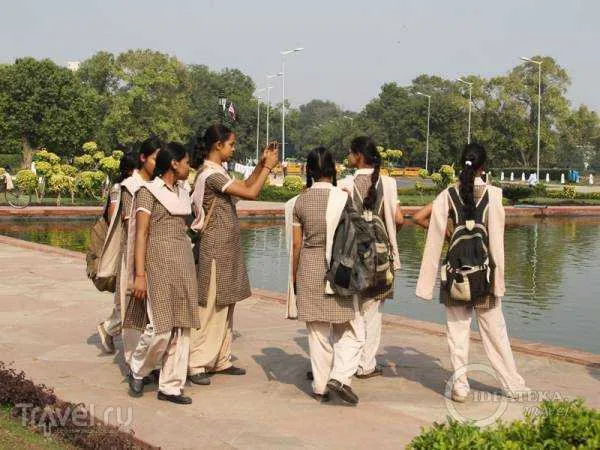
Shalwar kameez - a suit consisting of a tunic and trousers.
The third detail of this outfit is a long dupatta scarf in the same color as the top and trousers, usually sold in a set.
The top tunic can be different: short, barely covering the hips, and long, almost to the ground, narrow and straight or flared, similar to a dress. The trousers are made narrow and straight (sometimes too narrow, similar to leggings) or wide harem pants.
This is probably the most comfortable clothing for traveling in India. If there is one thing worth buying in this country, it is the shalwar kameez.
Lehenga-choli, lehnga-choli - a short, tight-fitting blouse with a long, wide skirt that reveals the stomach. However, a modern blouse can be long, on straps, sleeveless. This outfit is much less common on the streets: bright skirts decorated with lurex, sequins, "zzhrkaltsy", and even precious stones with gold chains are usually worn for holidays, celebrations, although in some states in the heat they are worn as everyday clothes.
For tourist purposes, lehenga-choli is not the most comfortable clothing: a long skirt made of brocade or chiffon, satin or velvet is rather impractical, and a bare stomach on the street may not be approved in puritanical villages.
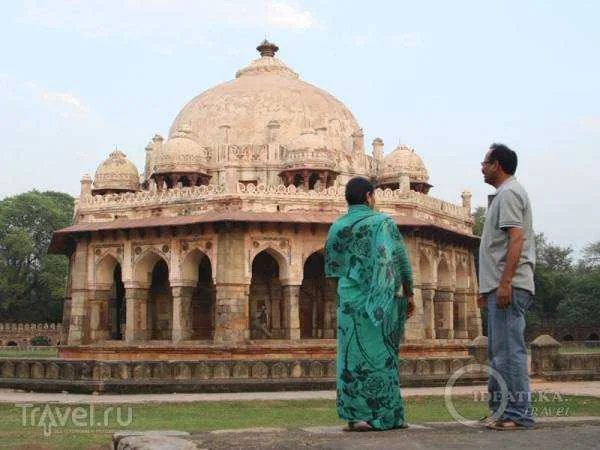
Sari – the most famous Indian clothing. It is a long cloth (usually 5-9 meters), in which Indian women can masterfully wrap themselves completely. First, they wrap the waist, draping folds around it, and throw the long end over the shoulder. There are many options for wearing a sari. Under the sari, they usually wear a short, tight-fitting blouse with a large neckline or a blouse and a petticoat.
Usually, when tourists come to India for the first time, they run to buy sari. And then disappointment sets in.
- Firstly, learning how to properly wrap several meters of fabric around yourself is quite difficult.
- Secondly, this outfit suits the fragile and miniature inhabitants of Hindustan and makes European women look considerably fatter.
- And finally, thirdly, if you haven’t worn a sari since childhood, it will be very uncomfortable for you to walk in it, ride in transport, and perform the most ordinary actions.
Therefore, the long piece of fabric then lies around in the closet for many years, at best, something is sewn from it. So, before you succumb to the charm of a salesman juggling a fantastic fabric, think about what you will do with it.
And if you still decide to experiment with a sari, in this video It shows how to wrap yourself in it correctly.
In some areas of the country, you can see other clothes. It is cold in the Himalayas in winter, and they wear warm sarafans like these. But this is only at first glance.
In fact, it is a large blanket that is wrapped around the body in a whimsical way.
Want to try it? Watch video instruction.
Source: travel.ru